
How to evaluate editing projects using the Three Rs framework
How do you decide which editing projects to take on?
Use the Three Rs framework: Reel, Rate, and Relationships. Accept any project that satisfies at least two out of three criteria to build your career strategically while maintaining financial stability.
The Three Rs framework for evaluating editing projects
I've been a pro editor for over 20 years, and I really struggled with evaluating editing projects until I came up with this framework. Even if you're a hobbyist or only edit for yourself, there's good wisdom in it for you too.
The framework breaks down every editing opportunity into three simple categories.
R1: Reel — Will this improve your demo reel?
The first R stands for Reel. That's short for demo reel, which is a collection of your best work that you show potential clients in order to get more projects.
A project that satisfies the Reel criteria is one that you're proud of, is creatively fulfilling, and one that you'd want to include on your demo reel.
Here's the tough thing about demo reels: people are going to hire you for the type of work that is already on your reel. So what if you've only done work that you don't really like and you want to do something different? It's a bit of a catch-22.
When I graduated from film school and opened up an edit suite in downtown Austin, the main way I paid the bills was editing corporate videos. If I had put together a reel of corporate videos, what type of work would I have gotten? More corporate videos. I didn't really want to do that.
R2: Rate — Does the project pay your asking rate?
The second R of the Three Rs is Rate. This is how much you get paid for an editing project.
A project satisfies the Rate criteria if it pays you your asking rate or better — simple as that.
For many editors, the idea of working for free seems counterintuitive to building a professional career. But as you'll see, there are strategic times when free work makes perfect sense.
R3: Relationships — Are these people you want to work with?
The third and final R in my 3R framework stands for Relationships. These are the people you're working for.
For a project to satisfy the Relationship criteria, they must be enjoyable or at least neutral to work with.
Working with difficult clients can drain your creativity and make even high-paying projects feel miserable. Professional video editors approach sound in every shot with careful attention to collaboration — the same applies to choosing your collaborators.
The Two-Out-of-Three Rule
The key is to look at the Three Rs together. My simple formula: if you've got at least two out of three, say yes.
Let me show you what I mean with real examples from my career.
Rate + Relationship projects (no reel value)
This is a project where you're getting paid your rate and you're working with people you like, but it's not creatively fulfilling work.
Remember that corporate job I told you about? I loved the people I worked with and they paid my asking rate, but I was largely editing very boring corporate videos. That can be tough for those of us who got into this field to edit creative projects, but at the end of the day, I paid my rent and made some good connections.
Overall, I'd say it was well worth it.
Discover the 5 criteria top editors use to craft emotionally-impactful edits — even when the source material isn't naturally compelling.
Rate + Reel projects (difficult relationships)
This is a project where you're getting paid your rate and it's creatively fulfilling, but you have to work with someone difficult.
Earlier in my career, I remember getting an email for a full-rate project with a great script, but when I asked around, I found out that the client had a bad reputation for being pretty difficult.
I ended up taking the job. I made a great piece for my reel and I got paid, but I did have to persevere through some really difficult interactions. Luckily, the job was only a few weeks; it wasn't months or years. If it were longer, it may not have been worth it, but overall in this case, I'm glad I took the job.
Relationship + Reel projects (free work)
This is where you're working with someone you like on a creatively fulfilling project, but you do it for free.
I think this is the best way to get creative work on your reel that you want to do more of.
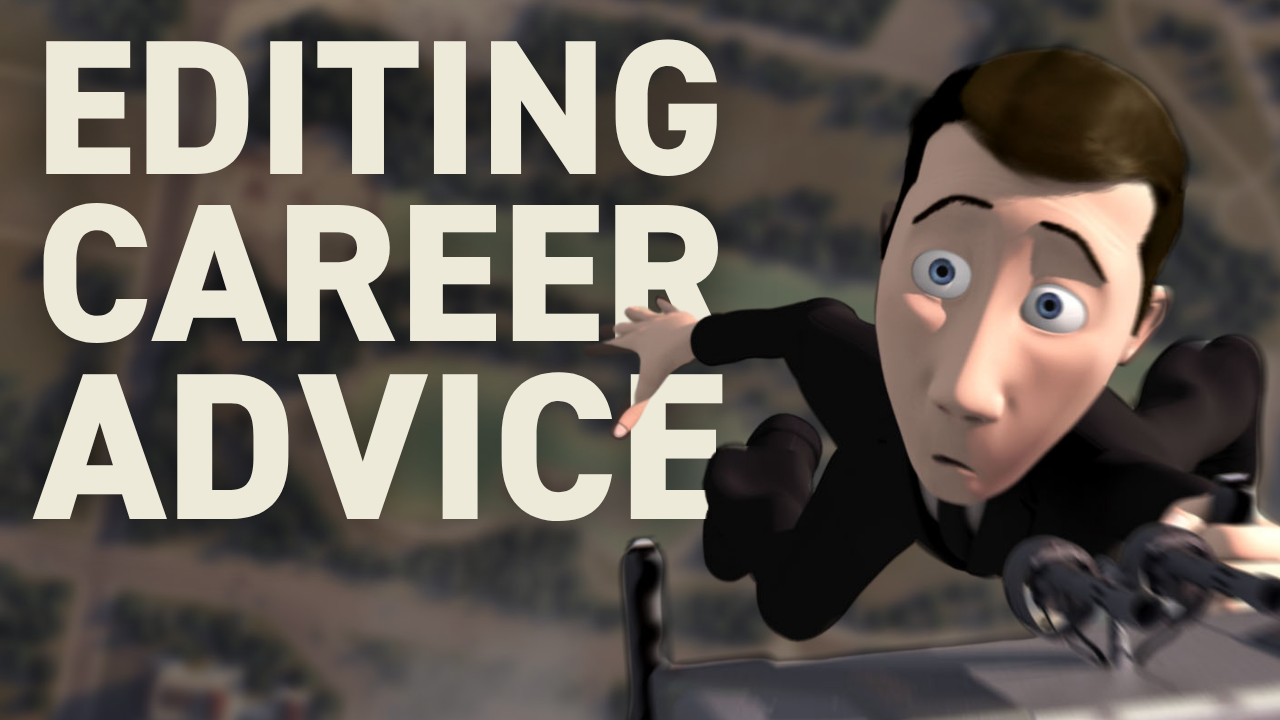
That's exactly what I was doing when I edited the 3D animated short film "Pigeon: Impossible." Writer-director Lucas Martell was and still is a good friend, and the project was extremely cool, so I said yes.
Over the course of several years, I helped him develop the story and edited the animatics. When he launched it on YouTube, it became a viral hit, and a major film studio actually bought the short film and turned it into a feature called "Spies in Disguise" starring Will Smith.
Because of that, I ended up getting paid for my work after the fact and I had a great piece on my reel.
Framework application for hobbyist editors
For those hobbyist editors out there or those who are just editing for themselves, you are in this category of Relationship and Reel.
I would just recommend you check in with yourself from time to time and make sure the projects you're working on are indeed creatively fulfilling and that you're only collaborating with people you really like. Because money is not a factor here, you have some leeway to be picky about these other two criteria.
When you only hit one R
I have one caveat for those of you working on editing projects that only satisfy the Rate criteria. Sometimes you have to work with difficult people on boring projects to pay your rent or support your family, and there's no shame in that. I've been there.
I would suggest, however, you try to build your demo reel on the side with some Relationship and Reel projects in hopes of getting better-paid work in the future.
The Three Rs framework turns project evaluation from guesswork into strategy. Instead of agonizing over whether to take on each opportunity, you can quickly assess where it fits and make decisions that move your career forward.
