
11 Professional Video Editing Lessons From 500 TV Commercials
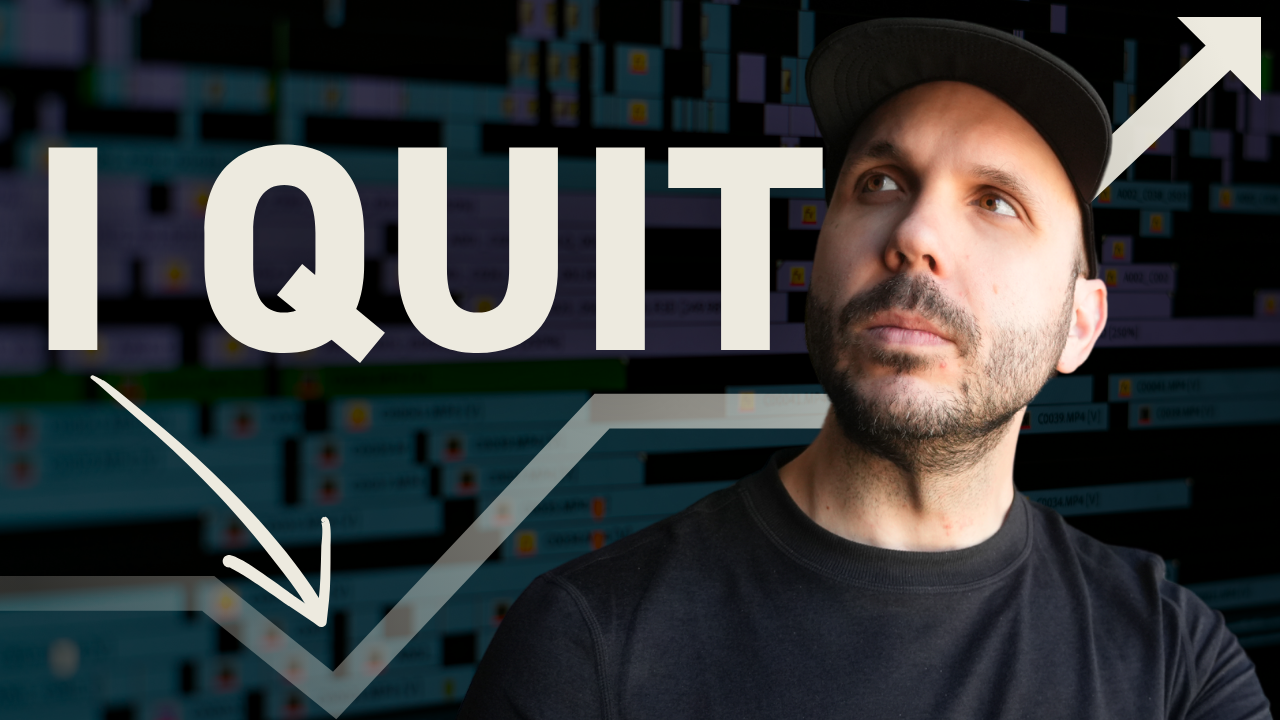
What are the most important lessons professional video editors learn?
After editing over 500 broadcast TV commercials with budgets of $100,000 and higher, the most crucial lesson is that your first hundred edits will be terrible — and that's normal. Every professional editor goes through a brutal multi-year process where their work doesn't match their taste level.
Key insights include:
- Embrace the learning curve rather than fighting it
- Focus on story and emotion over flashy techniques
- Build a supportive editor community
- Set input goals you can control, not outcome goals
Your First 100 Edits Will Be Terrible
I would say that my first hundred or so edits were total crap, and I knew it. That was so painful because I was inspired by films like The Usual Suspects, Fight Club, Pulp Fiction, Casino, and The Shawshank Redemption. Then I would sit down and work on my projects, and they literally felt like bad home movies. It sucked.
Later, I heard this quote from Ira Glass, the host of This American Life. He basically said that anybody starting a creative job has to live through this hard, multi-year process of not living up to your taste. So lesson one is you just have to stick it out. Complete project after project, get a little better each time, and eventually, you will start creating edits that live up to your taste. There is nothing more rewarding than that. Every editor had to go through this process.
Address Your Anxiety Before It Burns You Out
All types of editing can be super stressful. You're creating something out of nothing, often on tight deadlines. Commercials, in particular, had high budgets and high stakes. I felt like it lived and died with me as the editor. I had so much anxiety that halfway through my career, I was burnt out and felt I needed a multi-year break.
On that break, I discovered I actually had a ton of anxiety beyond the job itself. Because I had great mentors, I decided to do some inner work. When I came back to editing, I had jobs with the same difficulty levels, but I was able to handle them so much better.
If you're dealing with tons of anxiety, it may be time to do some inner work to reduce those levels so that you can enjoy editing more.
Stop Comparing Yourself to Other Editors
When I started editing, I made a horrible mistake. I would look at people who graduated with me and think, "That guy's editing a feature film," or "That person just won an award," or "That guy's day rate is double mine."
Comparing yourself to others is one of the worst things you can do for your mental health. Comparison is the thief of joy. The only outcome is your joy diminishing. Instead, only compare yourself to who you were yesterday. Only compare your current project to your last one. If you are improving, stay on your journey.
Build a Community Even If You're an Introvert
I am an introvert, and I think a lot of editors are. While we can spend 16 hours in an edit suite solving problems, there are downsides. I used to have social anxiety and told myself it was better to go it alone. Later, I realized that path is 10 times harder.
I decided to invest in friends who were editors. There are major upsides: you have someone to call with a problem, you can recommend each other for jobs, and you have people who understand what you're going through. No matter how introverted you are, being in a supportive community will change your work and your life.
If you're looking to build connections with other professional editors, getting high-end video editing clients requires understanding how the industry actually works.
Learn to Crave Feedback Instead of Hating It
When I started, I hated getting feedback. That's unfortunate because feedback is a critical part of the process that never goes away. Then I had an epiphany: my most successful projects had the most rounds of feedback from the most people. Once I connected feedback with getting the results I wanted, I started to crave it.
Start changing your mindset. Get the Think Like A Broadcast Editor guide to discover the 5 criteria top editors use to craft emotionally-impactful edits and make feedback sessions more productive.
Find a Mentor — It's the Only True Shortcut
I spent years trying to learn editing by myself. Because I went it alone, I made costly mistakes. I equated editing with software. While I was getting faster with the software, I wasn't learning the real techniques like emotion, story, rhythm, sound, and action. I rarely sought feedback, and when I did, it was from people at my same level.
This changed when I met a pro mentor who taught me actual techniques and gave me feedback on my work. This was the time my editing improved the most. Find a mentor. It is the only true shortcut.
Set Input Goals, Not Outcome Goals
I think the way you're setting goals might be hurting you. Many of us pick outcome goals, like wanting to win an award or make a certain amount of money. The problem is that you are not in control of those outcomes.
Instead, come up with input goals. Instead of "I want to win an award," say, "Every week, I'm going to make a new creative edit practicing a certain technique." Instead of a revenue goal, say, "I'm going to meet 10 potential new clients every month." You are in control of whether you achieve these input goals, and the outcomes usually follow.
Story and Emotion Matter More Than Flashy Cuts
I once worked on a commercial with a new director and wanted to make a good first impression. I decided to make the edit as explosive as possible with tons of cuts and fancy transitions. It totally flopped. I was trying to make something "cool" and failed to serve the story or evoke the intended emotions.
The amount of edits or fancy transitions does not relate to how good of an editor you are. It's about serving the story. You're not getting paid per cut. Story first, emotion first.
Editing Is Not Life or Death
I once worked on a high-stakes commercial where I worked day and night to meet a deadline. I uploaded it with one minute to spare. An hour later, I got an email saying the edit didn't meet quality standards and wouldn't air until the next day. I was crushed and panicked, but you know what happened? Nothing. No one died.
Editing is not life or death. We're not brain surgeons or firefighters. While we want to serve our clients well, don't carry the anxiety as if you're doing a life-or-death job.
Have Something More Important Than Editing
Editing, like most creative endeavors, is very challenging. There is a danger that the lows can crush you, and even the highs can crush you because they don't last or you still feel empty. The only solution is to have something in your life that is more important than editing.
For me, that is my faith and my family. Because editing isn't my end-all-be-all, the lows can't crush me and the highs don't make me too prideful. No matter how passionate you are, have something in your life that is more important.
Remember: It Beats Working
One of my first jobs was so hard that I worked 16 hours a day in a building with air quality issues and literally had an asthma attack. It was a nightmare. I vented to a mentor for 15 minutes, and he just looked at me and said, "It beats working." I have never forgotten that.
No matter how hard editing gets, it is a blessing to work in a creative field doing something you love. There are a lot of hard jobs out there involving physical labor or corporate offices. When times get tough, I always try to remember: it beats working.
Ready to take your editing to the next level? Edit Like A Broadcast Pro teaches you how to create emotionally-impactful edits that win serious clients with real budgets.
