
How to Edit for Story Structure Like Professional Editors
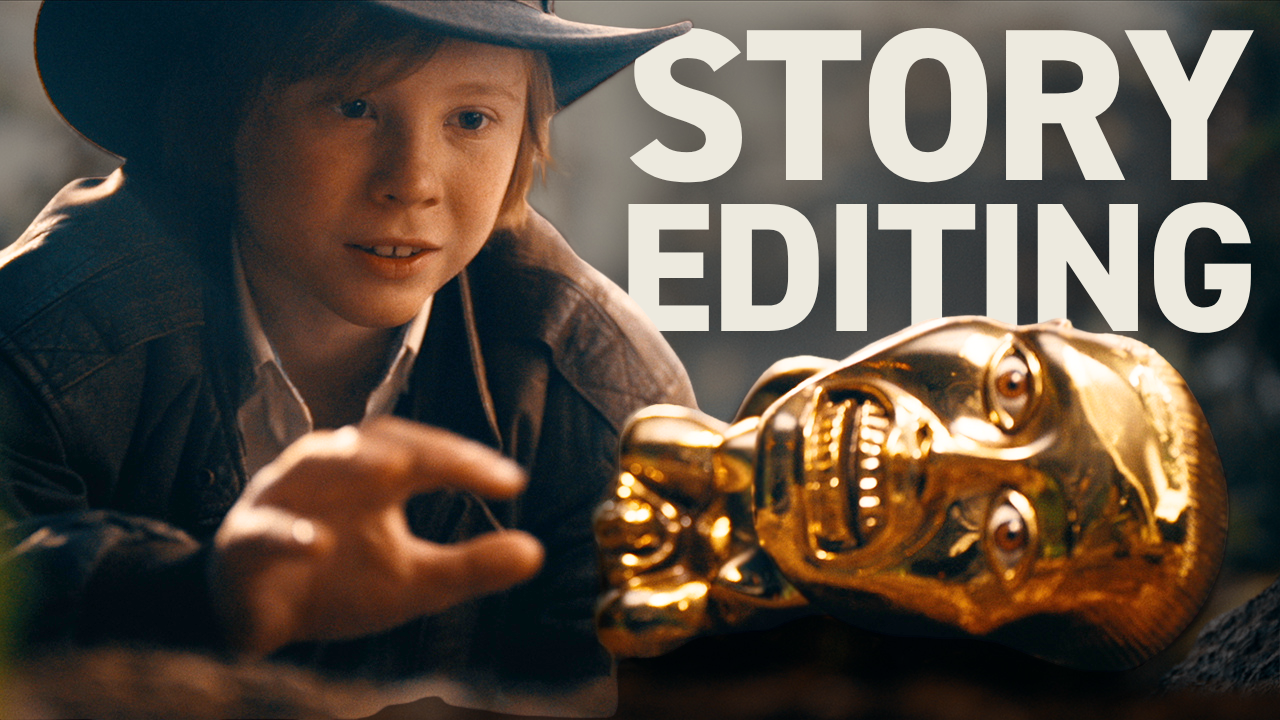
How do professional video editors use story structure in their editing workflow?
Professional video editors use three-act story structure as a recipe to create compelling stories by placing key story beats at specific timing percentages — first act at 25%, second act at 50%, and third act at 25% of the total runtime.
Story editing isn't just for screenwriters
When I started out as an editor, I thought story structure was all theoretical and wasn't something useful that I could apply to my editing projects. After over 20 years as a professional editor, I can tell you that's completely wrong.
Story editing should be one of the most important tools you have in your editing tool belt. I like to think of story editing as a recipe. Imagine you're baking a loaf of bread. If you have all the right ingredients in the right amounts and you follow the right timing, you'll end up with a delicious loaf of bread — or in our case, a compelling story. Skip an ingredient or miss time a step, and your bread will be inedible, or in our case, your story will fall flat.
The three-act structure blueprint for editors
I break down stories according to three-act story structure made famous in Syd Field's classic book, "Screenplay: The Foundations of Screenwriting." In his book, he says that the first act of a film should take up about 25%, the second act about 50%, and the third act the final 25%.
Let me walk you through how this works in practice using a three-minute short film I recently edited. As I outline the ingredients of a good three-act story structure, I'll check in and show you how our timing lines up.
Act One ingredients and timing
Ingredient 1: The Normal World
We open on an aerial view of a city and then reveal a young boy playing on his iPad. This is what screenwriters call the "Ordinary World" — showing the protagonist's normal life before anything disrupts it.
Ingredient 2: The Inciting Incident
"Screen time — break five minutes." This line sets our story in motion because it disrupts our protagonist's normal life. The mom taking away the iPad is what kicks everything off.
Ingredient 3: Plot Point One
"It's mine!" This is where the protagonist commits to the central conflict and reaches the point of no return. The hat literally transports him into a new world, and this is where Act Two begins.
The wide shot of the cave puts us at 26% of the way through the film — right on time for the end of Act One.
Act Two ingredients and rising stakes
Ingredient 4: Rising Action
Once we're in Act Two, we should keep presenting obstacles and raise the stakes as the story moves on. Professional editors approach sound design and pacing here to build tension naturally.
Ingredient 5: The Midpoint
What you want in a good midpoint is for the stakes to be raised significantly. In our case, we're meeting a clear antagonist. As the name suggests, the midpoint should show up right in the middle of your film. We hit this at 48% of the way through — right on time.
Want to master the emotional impact of your story beats? Get the free Think Like A Broadcast Editor guide and discover the 5 criteria top editors use to craft emotionally-impactful edits.
Ingredient 6: The Big Gloom
"Get off! It's mine!" This is the protagonist's lowest point. The idol is getting away and will be gone forever.
Ingredient 7: Plot Point Two
This takes the story in a whole new direction — when our protagonist decides to muster up the courage, change, and chase after the idol. Plot Point Two takes us to the end of Act Two at about 68% of the way through the film. Not quite at the full 75%, but we're in the ballpark.
Act Three payoff and resolution
Ingredient 8: Act Three Rising Action
Our protagonist is now chasing the bad guy through the jungle. We see the bad guy looks like he's getting away, but then our protagonist whips out a bola and knocks him out.
Ingredient 9: The Climax
"Okay, you can have it back now." "No thanks." This is our little boy declining the use of the iPad. If you remember when we opened on our normal world, we had a little boy who liked to play video games on his iPad. Now, by the end of the film, his character arc has him in a place where he declines to play games even when it's offered to him.
Ingredient 10: The Resolution
We're back to the normal world, but our protagonist is forever changed. He now has an imagination that allows him to have his idol.
Story structure works beyond narrative films
At the beginning of this breakdown, I wanted to clear up a common misconception about story editing — that it's only useful for narrative feature films like the ones you see in theaters. That is simply not the case.
The simple truth is that audiences respond to conflict, rising tension, character arcs, climaxes, and resolution. I've used these techniques in corporate videos, talking head interviews, montages, trailers, and even 30-second commercials.
Yes, it's true, oftentimes you don't have all the ingredients, but you probably have some of them. You can use these techniques to make sure the story beats fall in the right places to make the most impactful story possible.
Ready to take your editing to the next level? Edit Like A Broadcast Pro will teach you how to create emotionally-impactful edits that win serious clients with real budgets.
