
How Professional Video Editors Craft Smooth Edits That Flow
How do professional video editors make edits feel smooth and natural?
Professional video editors craft smooth edits by applying the five-question framework before choosing any technique. They prioritize emotion, story, and rhythm over flashy transitions, then use tools like J-cuts to serve those editorial goals.
Why Hard Cuts Work (But Need Precision)
Hard cuts are the foundation of professional editing. They're punchy, direct, and when executed properly, completely invisible to the viewer.
The key is precision. When cutting dialogue, you need consistent room tone spanning both shots. Any ambience shift will jar the viewer out of the story. Add room tone or ambience to bridge the gap if needed.
Your cut point matters too. You might need to cut out a breath or slight movement to make the transition crisp. The goal isn't to hide the edit — it's to make it serve the story.
The Five Questions That Guide Every Professional Edit
Here's the framework that shapes every editing decision, borrowed from Walter Murch's six criteria and refined through 20 years of professional work:
- What is the emotion of the scene?
- What is the story of the scene?
- What is the rhythm of the scene?
- What is the sound of the shot?
- What is the action of the shot?
These questions matter more than any technique. A J-cut is meaningless if it doesn't serve the emotion or story you're trying to tell.
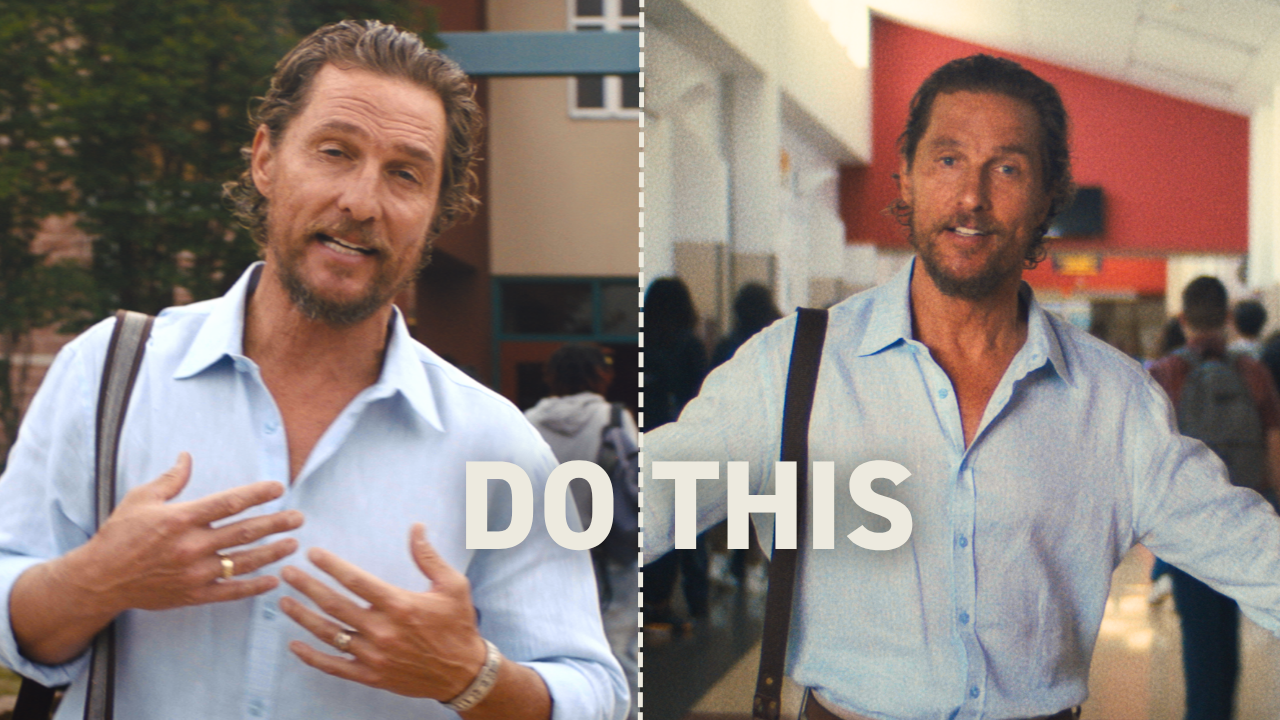
Take a Matthew McConaughey commercial I edited. The emotion was confidence — he felt like an authority sharing something important. The story needed to move forward, getting all his information out efficiently. The rhythm was established by Matthew and the camera movement. The sound included birds and school kids talking. The action was his mouth closing and the camera moving up stairs to reveal him.
Those answers shaped the edit.
When J-Cuts Create Forward Momentum
Instead of simply extending the first shot to show Matthew turning his head, I brought in the audio from the next shot early. This J-cut — named for how it looks like the letter J in your timeline — accomplished two things.
It told the story of him entering the school. And it added forward thrust to the rhythm, pulling the viewer into the next moment instead of lingering on the previous one.
The technique worked because it answered the five questions better than a straight cut would have.
Making the Right Choice for Your Story
Get my free editing guide to see more examples of how these questions guide professional editing decisions.
J-cuts are particularly valuable when cutting dialogue scenes, but they're just one tool. The five-question framework helps you choose when to use them and when to stick with a hard cut.
The goal isn't smooth edits for the sake of smoothness. It's edits that serve your story, maintain your rhythm, and keep viewers emotionally connected to what they're watching.
