
How professional video editors create believable spec commercials
How do professional video editors create believable spec commercials?
Professional video editors create believable spec commercials by nailing the emotional tone, using visual techniques to unify stock footage, and choosing mid-tier brands that audiences believe they were actually paid to create.
What Makes a Spec Commercial Feel Professional
Professional editors understand that spec commercials — speculative ads made without payment in hopes of landing work or building demo reels — succeed when they evoke genuine emotion.
The most important element isn't technical perfection. It's whether the edit makes viewers feel something. When analyzing a subscriber's Nike-style sports commercial, the piece succeeded because it delivered that inspirational, motivational feeling common in high-end sports advertising.
Sound design played a crucial role. The interplay between voiceover, music, and subjective sound effects — the booms, hits, and whooshes that punctuate emotional moments — elevated the entire spot beyond typical amateur work.
The Visual Unity Technique for Stock Footage
Professional video editors approach sound in every shot with intention, but the visual treatment matters equally for spec work.
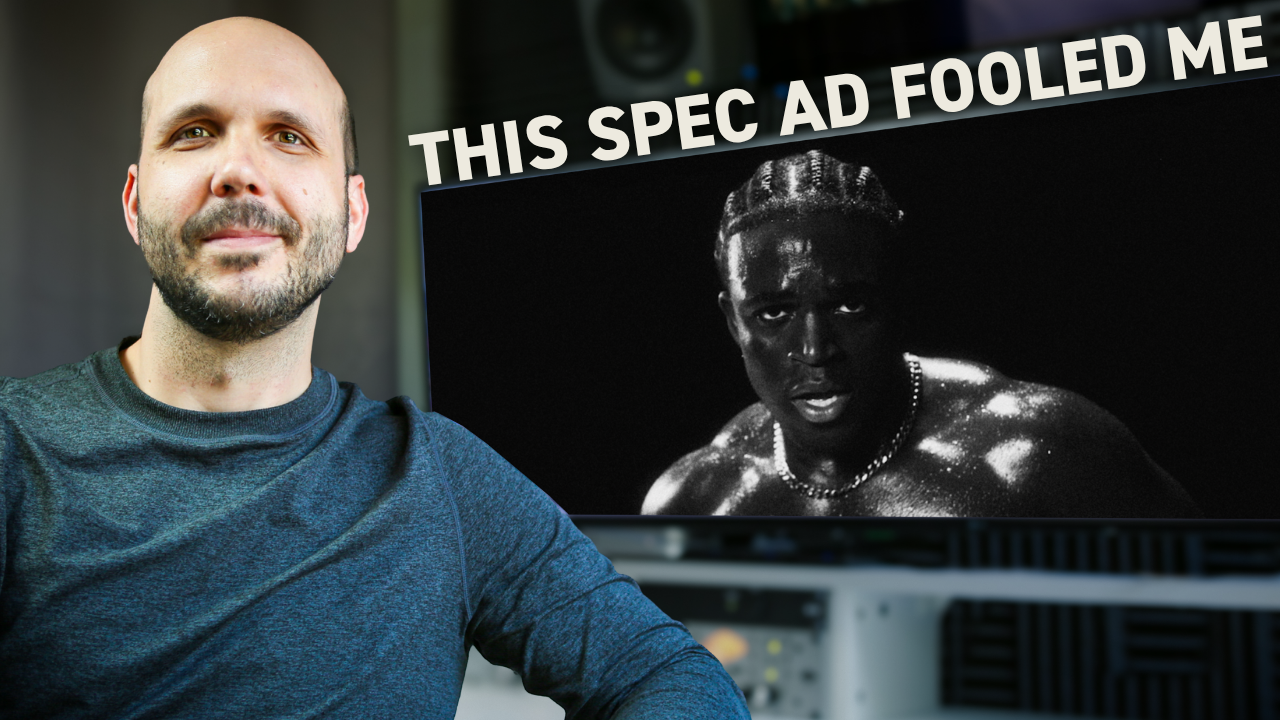
Instead of leaving disparate stock footage as-is, professional editors apply a consistent visual treatment. In this case, everything received the same black and white, high contrast, slightly grainy look. This technique makes random stock clips appear as if they were all captured specifically for the commercial.
This visual unity approach is critical for spec commercials because it masks the budget limitations and creates the illusion of a cohesive production.
Strategic Rhythm and Music Structure
The edit worked best when cutting patterns synced with music and sound effects. These weren't constant throughout — much of the commercial remained montage-style — but when rhythmic motifs appeared, they added structure.
When these patterns repeated throughout the edit, viewers experienced a satisfying sense of familiarity. Professional editors know that strategic repetition creates emotional payoff.
Where Most Spec Commercials Fail
The biggest mistake editors make with spec commercials is choosing brands that are too big. When someone creates a fake Nike, Adidas, or Apple commercial, industry professionals immediately recognize it as spec work because these brands spend millions on their advertising.
The production quality gap becomes obvious. Top-tier brands have budgets for locations, talent, and post-production that individual editors can't match.
Instead, smart editors choose mid-tier brands where the production value feels believable. When done well, viewers — and potential employers — assume the editor was actually paid to create the work.
Story Structure Improvements for Emotional Impact
Even solid spec commercials can benefit from traditional three-act story structure. The most effective improvement involves creating a "big gloom" moment around the 75% mark — the character's lowest point.
This means gathering all shots where athletes look like they're struggling, might not succeed. Then strip the soundtrack down. Let music drop out longer. Maybe remove sound effects entirely, leaving only voiceover and silence.
After this quiet, low moment, build to a massive climax. How professional video editors use music structure and timing becomes crucial here. Add stadium cheers, celebration sounds, and shots of clear victory — soccer balls hitting nets, golf balls dropping in holes.
The contrast between quiet despair and loud triumph creates powerful emotional impact right before the final brand reveal.
Technical Choices That Affect Perceived Value
Aspect ratio affects how expensive your commercial appears. The wider the format, the higher the perceived production value.
Cinematic films often use 2.35:1 — very wide, highest perceived budget. Broadcast television uses 16:9 — high production value. Social media uses 9:16 — typically lowest budget perception.
When viewers see wider aspect ratios, they unconsciously assume higher production budgets. For spec commercials targeting broadcast work, 16:9 or even 2.35:1 creates that expensive commercial feeling.
The Cutdown Challenge
Professional commercial editors always create multiple versions. A 60-second commercial typically requires 30-second, 15-second, and sometimes 6-second cutdowns.
This becomes an exercise in storytelling economy. What are the absolute minimum shots and voiceover lines needed to make the story work?
Often, the 30-second version ends up stronger than the original 60-second spot because it forces you to keep only the best moments. This gives your demo reel flexibility — sometimes clients want to see shorter work.
Discover the 5 criteria top editors use to craft emotionally-impactful edits and transform your approach to commercial editing.
Why "Failures" Are Actually Wins
Even when spec commercials don't land work with their target brands — which is common — they serve multiple purposes. The creative exercise of crafting something compelling from stock footage builds real skills.
The finished piece lives on demo reels for years, potentially leading to paid work. The return on investment comes through improved technique and portfolio strength, not necessarily immediate brand response.
The key is choosing realistic brand targets and focusing on emotional storytelling over flashy techniques. When executed well, spec commercials demonstrate professional-level thinking and execution that clients recognize and value.
Ready to create emotionally-impactful edits that win serious clients? Learn the professional editing workflow system used by broadcast editors on high-budget commercials.
