
How Professional Video Editors Decide Where to Cut Every Shot
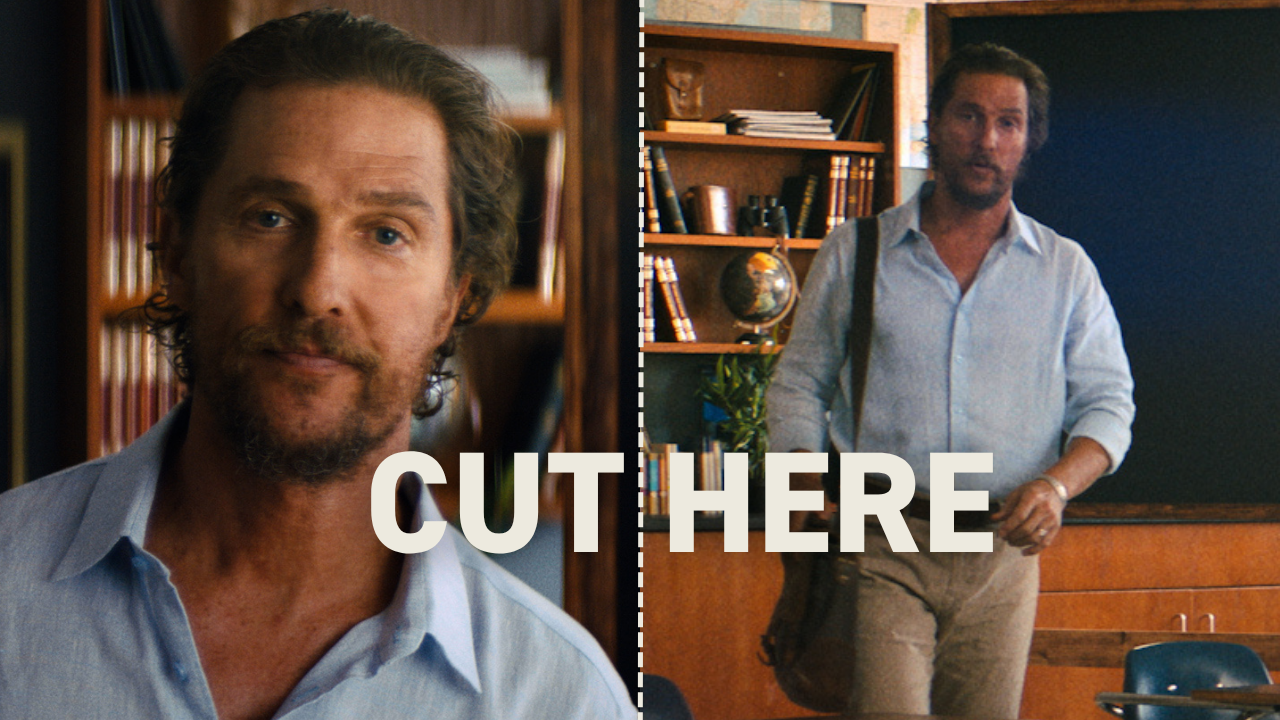
How do professional video editors decide where to cut in and out of shots?
Professional video editors cut in at the beginning of an action and cut out at the end of an action. This simple rule applies to everything from giant action sequences to subtle eye movements, giving editors a reliable framework for making precise editing decisions.
Most editors know how to make an edit, but deciding where to make an edit separates professionals from amateurs. After 20 years as a professional editor, I've learned that this one principle guides nearly every cut I make.
The framework sounds simple — and it is — but as you dig deeper, you realize the options within it are endless.
What counts as an "action" in video editing
An action is anything happening in the frame. It can be as dramatic as a giant spider monster or as subtle as an eye movement. The camera movement itself counts as an action too.
Most shots contain multiple actions to choose from. You might have an actor speaking, their hand gesturing, and the camera slowly pushing in — all happening simultaneously. Your job is identifying which action serves the story best and timing your cuts around that choice.
The timing isn't always exact
You might wonder if "beginning of an action" means the exact frame the action starts. It depends on what you're cutting.
For action scenes, you might cut right on the frame the action starts — or even a bit after for a certain effect. You might also cut out before the action finishes to give a sense of urgency.
For dramatic exchanges between actors, the timing changes completely. If the action is an actor finishing a word, you might wait a whole beat after the action ends before cutting away. That pause lets the emotion land.
The cumulative effect on your editing
Being deliberate with your in-and-out points creates a cumulative effect on the quality of your videos. Each precisely timed cut builds on the last one, creating rhythm and emotional momentum that viewers feel even if they can't articulate why.
On your next project, ask yourself: what is the action of this shot, and does the timing of my in-and-out points add to the emotion of the story? That question alone will push your editing to a more professional level.
The goal isn't to give you all the answers — it's to give you a starting place. Once you master this basic framework, you'll develop the instincts to know exactly when to break the rule for maximum impact.
Download my free editing business Kickstart guide to learn more professional editing techniques that will set your work apart.
