
How to make seamless video transitions using 5 music techniques
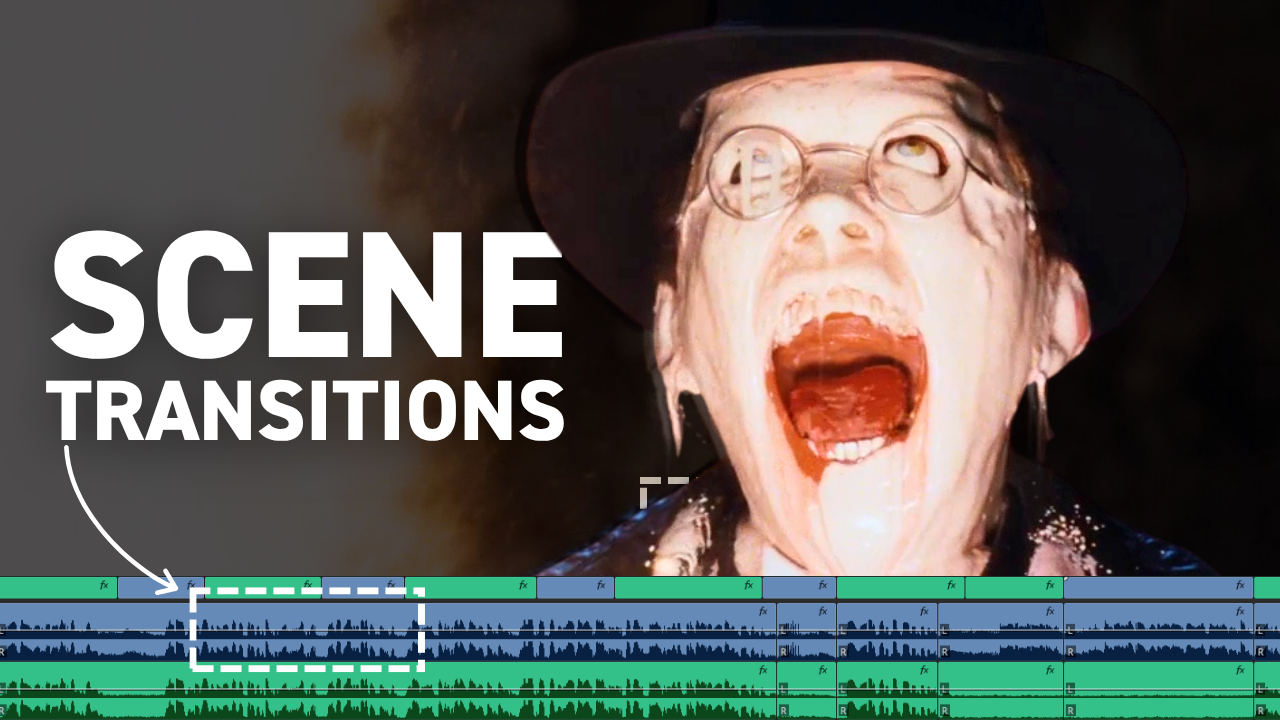
How do you make seamless transitions in video editing?
Use music to bridge your scene changes. Professional editors rely on five specific music techniques — outro carryovers, intro carryovers, musical hard cuts, musical shifts, and in-scene shifts — to create smooth or intentionally jarring transitions that serve the story.
The outro carryover technique
The first technique involves letting your music end across the cut between scenes. Instead of cutting the music at the scene boundary, you let the song finish naturally as you transition into the new scene.
This creates what I call an outro carryover — the ending of the music happens over the cut from one scene to another. It gently drops the audience into the new scene while maintaining emotional continuity.
In Raiders of the Lost Ark, editor Michael Kahn and composer John Williams used this technique when transitioning from the "bad dates" scene. The music that started in the first scene begins to end as the scene closes, then finishes ending at the beginning of the second scene. The emotional carryover maintains that sense of dread from seeing the dead monkey as we move into the next scene where bad guys are visible.
Intro carryover bridges time and emotion
The second technique works in reverse — you start new music at the end of one scene and let it continue through the transition. This intro carryover helps bridge both emotional and temporal shifts.
In another Raiders transition, the music comes up in the middle of a shot during the first scene, creating a beautiful musical cue that takes us into how Indy feels being captured. Then there's a dissolve showing passage of time, but the music keeps going throughout. The music is bridging this transition from Indiana Jones being in power to being captive, while also indicating an ellipsis in time.
The key is starting the new song before you need it — at the end of the current scene — then letting it carry through to establish the tone of what's coming next.
Want to master the emotional criteria that guide these decisions? Think Like A Broadcast Editor reveals the 5 criteria top editors use to craft emotionally-impactful edits.
Musical hard cuts create stark contrast
Sometimes you want the opposite of seamless — you want to emphasize the transition. That's when you use a musical hard cut.
Whatever song you have playing in the first scene, you hard cut it out completely before going to the next scene. This creates stark contrast that draws attention to the cut itself.
In Raiders, when we're with the ark in the bowels of the ship, there's supernatural musical energy with that warble effect. Then that supernatural cue cuts out completely when we transition to someone waking up in a cabin. The hard cut emphasizes the tonal difference between the supernatural and mundane scenes.
You can also do this in reverse — have no music in the first scene, then cut to music right on the first frame of the next scene for equally stark contrast.
Musical shifts change composition mid-transition
The fourth technique uses music that changes its composition while continuing to play. The song itself bridges the transition, but the actual musical arrangement shifts to match the new tone you're establishing.
In the Raiders transition from jungle to college campus, the music at the end of the jungle scene plays the Raiders march with a comedic beat — Indy won, everything's great. Then there's this incredible shift with a gong sound that acknowledges the college campus setting. The music transitions us emotionally into a very different classroom scene that's unexpected but works because the music tells us something different is happening.
If you're not working with a composer like John Williams, you can find tracks that have built-in shifts — tonal changes, verse to chorus transitions, or intro to verse shifts. Place that musical shift right on your cut to create this feeling.
In-scene musical shifts highlight emotional changes
The final technique happens within a single scene or shot rather than between scenes. You can create extreme musical transitions to highlight big emotional changes within your scenes.
In the Raiders ark-opening scene, John Williams creates majestic, beautiful music as these spirit-angels fly around. Then right when one beautiful face turns into a skull, the music immediately shifts to indicate things won't go well for the Nazis.
This in-scene musical shift works wonderfully to highlight major emotional pivots without cutting to a new scene. How to edit videos for emotion using rhythmic tempo changes explores how rhythm changes can amplify these emotional moments.
Most editors never master these techniques because they think about music as background elements rather than transition tools. But professional editors understand that music doesn't just support your edit — it can actually create the transition itself.
These five music techniques — outro carryover, intro carryover, musical hard cut, musical shift, and in-scene shift — give you precise control over how your audience experiences scene changes. The key is choosing the right technique for the emotional journey you're creating.
Ready to take your editing to the professional level? Edit Like A Broadcast Pro teaches you to create emotionally-impactful edits that win serious clients with real budgets.
