
Video editing contrast exercise to master rhythmic editing
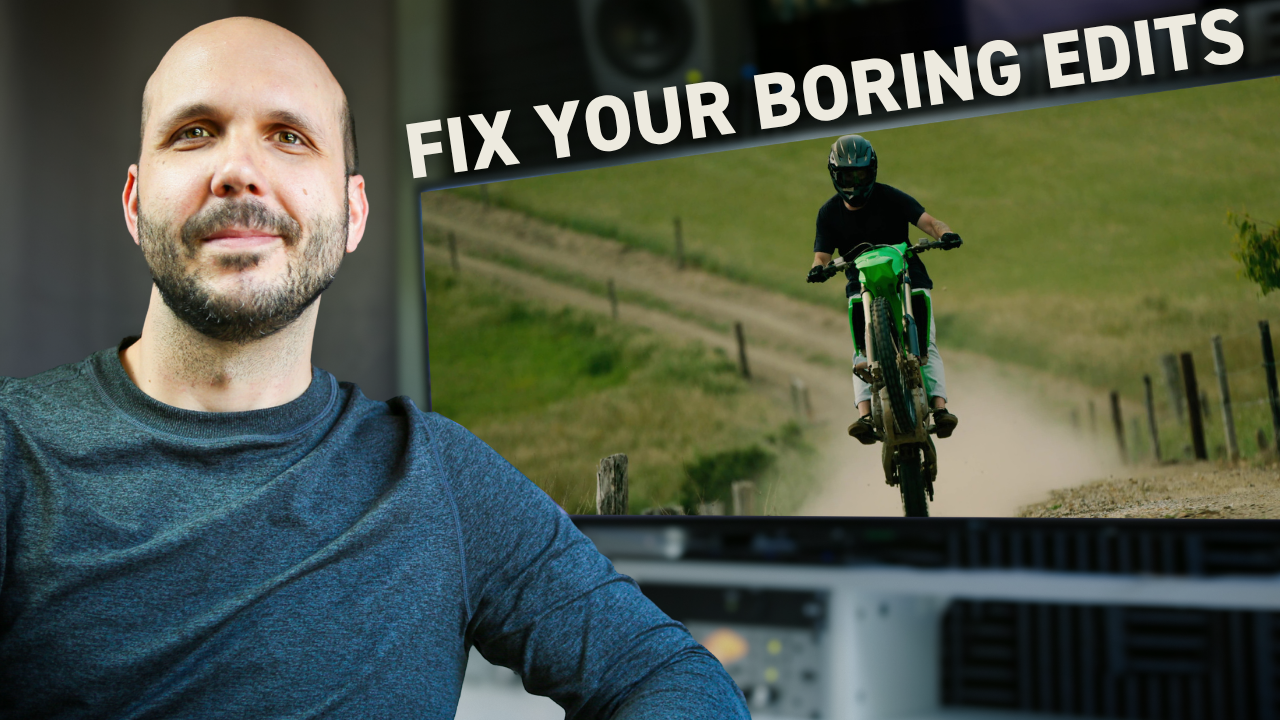
How do you practice video editing contrast to create emotional impact?
Practice video editing contrast by implementing five key techniques: sound design cuts between shots, music drops for dramatic effect, rhythmic tempo changes, perspective shifts in audio, and visual scale jumps from wide to close-up shots.
The best edits aren't always invisible. When you need to evoke emotion, adding deliberate contrast between shots creates powerful impact.
Sound design contrast through hard cuts
Most editors finish their visual edit and add just a couple sounds for the whole piece. They might pick forest ambiance since the dirt bike rider is in woods, then add a motorcycle sound long enough to fit under everything.
A more effective approach creates wonderful contrast: find a different sound for each shot. When you hard cut between visuals, also hard cut between sounds. New shot, new sound. Contrast, new shot, new sound.
In the demonstration sequence, the first shot uses three footsteps sounds. Second shot features a bird cooing — doesn't have to make perfect sense. Third shot introduces motorcycle starting with a sound advanced cut, where you hear the sound before cutting to the next shot.
The biggest sound contrast happens when cutting from dynamic motorbike sounds to quiet forest moments. You go from mechanical, loud revving to serene forest ambiance. Professional video editors approach sound in every shot with this same intentional mindset.
Music contrast for emotional peaks
When I started editing, I'd finish visuals then search for music that matched the vibe. I'd lay one track under the whole edit and call it done. Later I realized music offers one of the biggest opportunities to add contrast.
The most powerful technique: go from music to no music, or no music to music. That dropout in music creates such big contrast it evokes emotion immediately. We get quiet and loud contrast, then when music returns as the tire hits ground, it creates fun, energetic emotion.
Instead of letting music fade out, choose a part that feels like an ending and make a music edit so it ends when your piece ends. Next time you edit music, ask what emotion you're trying to evoke. To make biggest contrast for biggest emotional impact, go from music to no music in a matter of frames.
Rhythmic contrast through tempo changes
One of my favorite visual contrast techniques is rhythmic contrast — changing how quickly you're cutting between shots or how long you stay on shots. You can measure tempo in cuts per minute.
If you're making ten cuts per minute average, then switch to five, you go from fast tempo to slow tempo. You can do the opposite too.
The demonstration starts with four shots establishing rhythm — all about the same length. Then it slows down with three longer shots. The biggest rhythmic contrast point shows how long those shots are, then four shots happen in roughly the same timeframe I previously had two. Coming out the other side, I go from four shots back to about two shots.
Video editing rhythm exercise to master rhythmic contrast teaches you to establish rhythm or tempo, then change it. You don't have to change it as much — you could change less for less impact, or go more extreme. Imagine if instead of four shots, you had eight. Those tricks elicit emotion.
Advanced sound perspective shifts
Going deeper than hard cutting between sounds, it's about how different those sounds are. You can go from quiet sounds to loud sounds, or from motorcycle revving to quiet forest. When music drops out, we go from high-revving motorcycle and hard cut to very quiet forest ambiance.
Not only did I hard cut between sounds, but the sounds themselves had major contrast. We go from motorbike — mechanical and loud — to beautiful serene forest. Cutting between those types of sounds makes impact.
One technique requiring extra work is perspective shift. There's big difference in what a motorcycle sounds like if you're riding it versus listening from 100 yards away. To shift sound perspective, you might need different sounds, but you can also use mixing techniques.
Sound Effects Search Terms Guide helps you instantly know what to search for so your edits sound better, faster.
I put reverb on certain sounds to make them feel like different perspective, plus slowed them down which changes the feeling. It's subtle but adds contrast.
Visual contrast through scale and movement
Not all contrast types are created equal. You can implement less intense contrast just to build interest without making edits less seamless.
Often we think about going from wide shot to medium shot to close-up — that's standard order. One way to add contrast: skip that middle shot. Go from really wide shot to close-up, or vice versa. That's subtle contrast.
I went from relatively wide shot to close-up of the rider in his helmet. I left out the medium shot alternative, choosing more extreme punch-in to add contrast.
Other powerful contrasts include slow-mo footage cut with normal speed footage. You might even speed up the full-speed shot to increase that contrast. Going from static shot to handheld shot creates visual contrast too.
Editing with intentional contrast
A lot of people say most good edits are invisible. There's certainly a case for that. But there's a place for adding friction and contrast when you need powerful impact.
Only use contrast as you need it to evoke emotion. Think about what emotion you're trying to evoke in opening five seconds and ask: "What tools in my editing tool belt can I use to get that emotion?" If contrast comes to mind, use it.
That's what makes you go to next level as an editor: editing with intention. Don't just sprinkle these techniques through edits. Use them with deliberate mindset to evoke emotion in your audience. Do that, and you'll be in the top 1% of editors.
Edit Like A Broadcast Pro teaches you to create emotionally-impactful edits that win serious clients with real budgets through this same intentional approach.
