
Why video editors should work on set during production
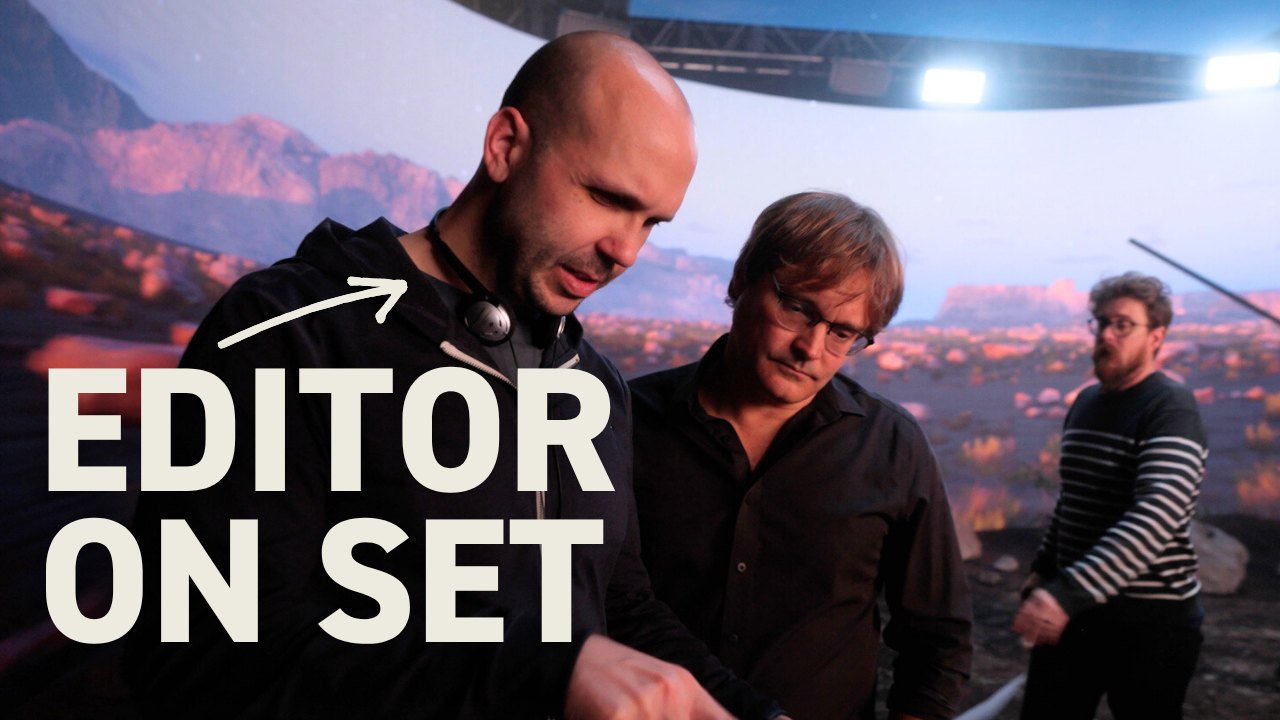
Why should video editors go to set?
Video editors should go to set because it transforms their understanding of the footage and improves their relationship with production teams. Being on location gives editors crucial context about takes, helps catch problems in real-time, and provides a head start on the editing process.
Shooting is more complex than it looks from the edit suite
The relationship between production and post-production teams can get strained. You've probably heard the loaded phrase "fix it in post" and felt a little disrespected. Why not get it right in camera?
But that mindset isn't healthy. In sports, they call it Monday morning quarterbacking — it's easy to critique the quarterback's play on Sunday from your sofa on Monday. You weren't in the game. Do you really think you could have done better?
If you find yourself with a negative attitude toward the crews shooting your footage, here's my recommendation: start going to the film sets of the projects you're editing. It really changed my mindset, and I made some great friends in the process.
Shooting is a very complex process, and sometimes "fix it in post" makes sense. Say you're running out of time at a location and can't quite nail the shot, but you think you can add that element as a visual effect. A good producer will calculate the cost of overtime versus the cost of adding a visual effect in post.
If I'm on set when a situation like this arises, I'm there to weigh in on the post side and help them make an educated decision. Instead of being a Monday morning quarterback, I'm in the thick of the action.
You can catch mistakes and contribute ideas in real-time
Being on set means I can help catch mistakes or give fresh ideas live instead of saying later, "I wish they'd caught this," or, "Man, it would have been cool if they would have done this."
This collaborative approach strengthens the entire production. You become part of the solution instead of someone who points out problems after the fact.
Get a head start on your editing workflow
My favorite part of being on set has to be that it gives me a head start on editing. I know what takes the director liked best. I know what takes the ad agency or client liked best. I know when something needed to be fixed or if there was a glitch in the camera. I know that they recorded some wild sounds right in the middle of a take.
Think Like A Broadcast Editor — this systematic approach to understanding your footage before you edit is exactly how top editors craft emotionally-impactful work that wins serious clients.
Organizing becomes a breeze, and I have a deep understanding of the footage before I even watch a single frame at my edit suite. This context makes every editing decision more informed.
Alternative ways to get on set
If the project you're editing doesn't have the budget to bring you on set, consider taking on the role of script supervisor or media manager. These positions allow you to be on set, and they go hand in hand with editing.
I was script supervisor on one set, timing shots and keeping track of continuity. If I catch a mistake while editing, guess whose fault it is? Mine. That definitely happens from time to time, and it gives me great empathy for those production people.
Being in both roles — production and post — gives you perspective that most editors never get. You understand the pressures, the time constraints, and the creative challenges that shape every decision on set.
Get out of your editing cave and head to set if you're in a position to make this happen. I think you'll be a better editor for it. Let's help bridge the gap between production and post since we're all on the same team.
Ready to take your editing skills to the next level? Edit Like A Broadcast Pro will teach you to create emotionally-impactful edits that win serious clients with real budgets.
