
How to Practice Cross-Cutting with Professional Editing Exercise
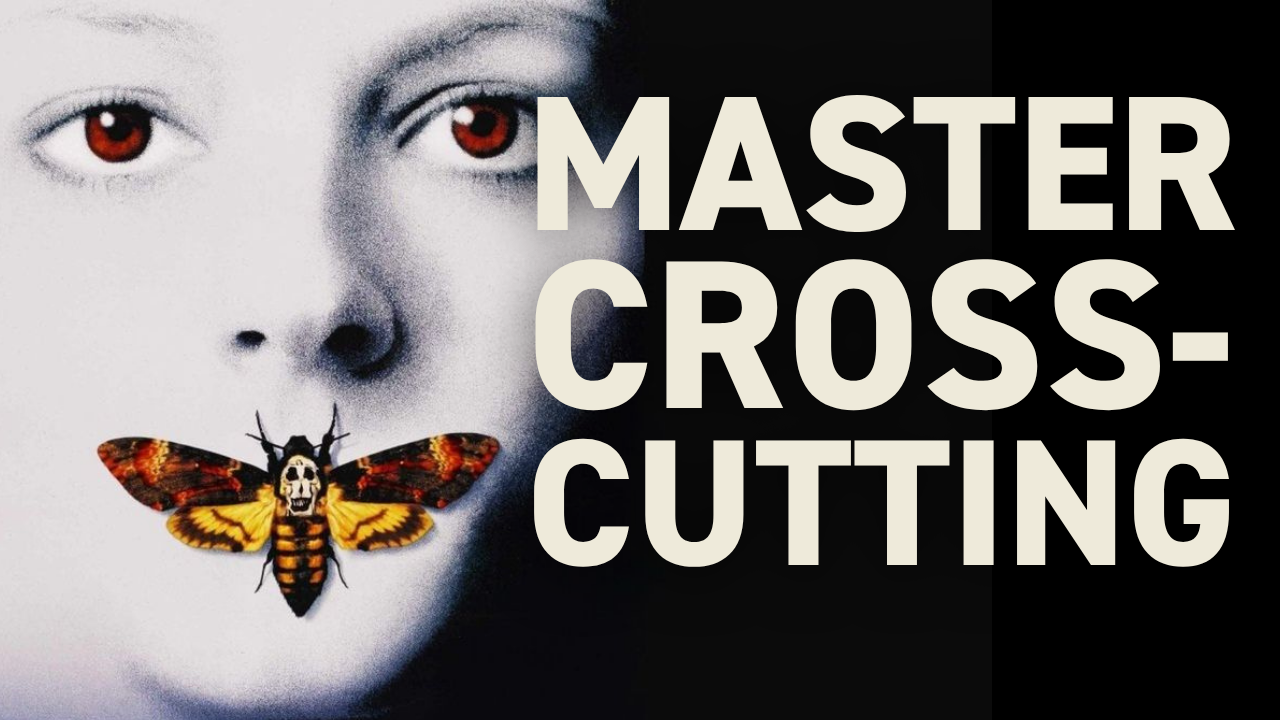
How do you practice cross-cutting in video editing?
Practice cross-cutting by downloading two contrasting footage collections and cutting between scenes that build tension. Use realistic sound effects for one scene and music with intense effects for the other to create contrast.
What Cross-Cutting Actually Does in Professional Editing
Cross-cutting, sometimes called parallel editing, is when you cut back and forth between two different scenes. The scenes can happen at the same time in different locations, at different times in different locations, or even in different dimensions.
Cross-cutting builds intensity and creates suspense. It's most effective when both scenes individually rise in tension — when you intercut them, the tension rises exponentially.
The Silence of the Lambs Masterclass in Cross-Cutting
One of the best examples comes from the 1991 Best Picture winner, The Silence of the Lambs. Editor Craig McKay cuts between multiple characters in multiple locations to create one of the most memorable scenes in film.
The sequence shows an exterior FBI raid while cutting to an interior scene with Clarice Starling. The doorbell bridges both scenes perfectly. When the reveal happens — that they're different houses and Clarice is alone with the killer — it's an incredible moment in cinema.
Why This Example Works So Well
First, timing matters. This scene occurs in Act Three leading up to the climax — the perfect time to use cross-cutting.
Second, both scenes individually rise in tension throughout. When they're intercut, the tension multiplies.
Third, the soundtrack weaves the scenes together while creating contrast. The exterior has naturalistic sound effects and no music. The interior has subjective sound effects and a musical score. How professional video editors approach sound in every shot explains how pros use sound to enhance emotional impact.
Your Cross-Cutting Practice Exercise
Here's how to practice this technique with real footage:
Download two contrasting footage collections — one exterior action scene and one interior tension scene. Also grab a music track for one scene and some free quality sound effects.
Choose shots from both scenes that become increasingly intense. For one scene, create a realistic soundtrack with simple sound effects and no music. For the other scene, use music and more intense sound effects to create contrast.
The contrast between soundtracks helps weave the scenes together while keeping them distinct. Professional video editing workflow for commercials shows how pros structure complex sequences like this.
Start with your most intense moments and work backwards. Cross-cutting works best when you're building toward something — a reveal, a climax, or a collision between the two storylines.
Why This Exercise Builds Professional Skills
Cross-cutting teaches you to think beyond single scenes. You're managing multiple storylines, pacing both individually and together, and using sound design to create contrast and connection.
This technique appears constantly in commercials, feature films, and high-end content. Think Like A Broadcast Editor: Discover The 5 Criteria Top Editors Use To Craft Emotionally-Impactful Edits shows you how pros approach complex editing decisions like these.
Professional editors use cross-cutting when they need maximum emotional impact. Master this exercise and you'll understand how to build tension through structure, not just individual shots.
Ready to take your editing to the next level? Edit Like A Broadcast Pro: Create Emotionally-Impactful Edits That Win Serious Clients With Real Budgets teaches you the complete system pros use for high-end work.
