
Why Professional Editors Cut Out Good Shots and Expensive Footage
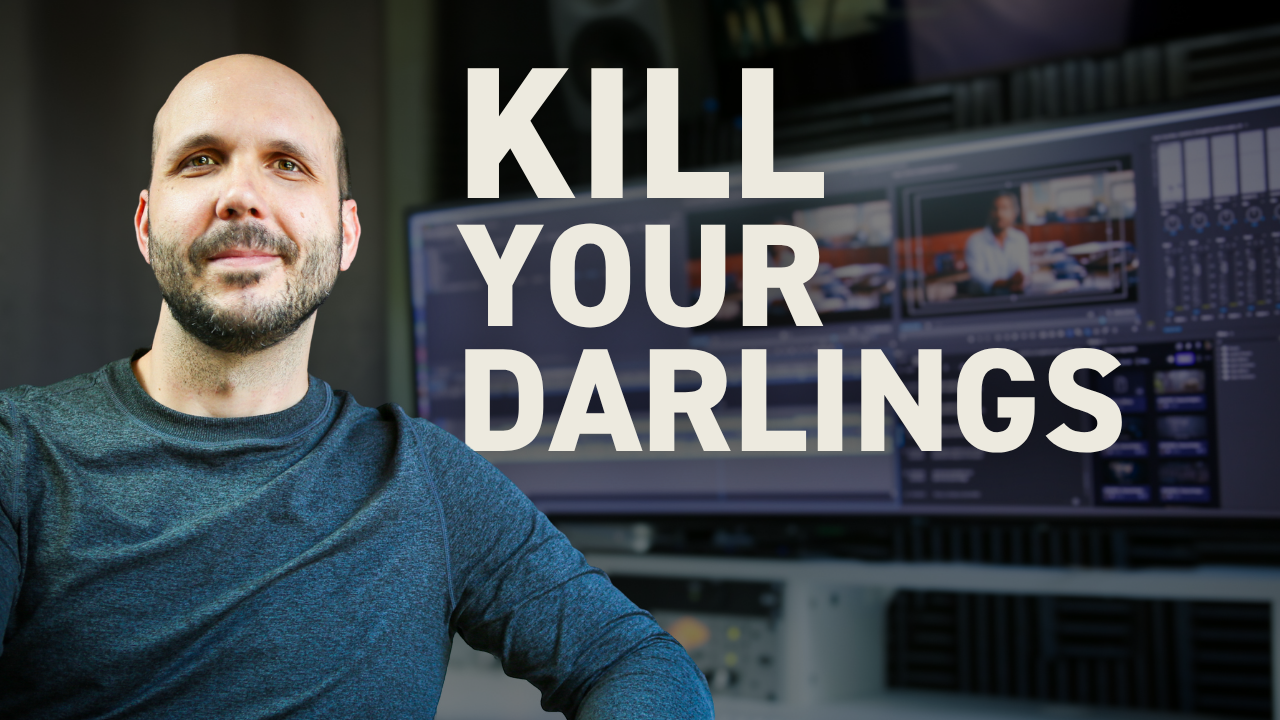
Why do professional editors cut out good shots and expensive footage?
Professional editors cut out good shots because great editing isn't just about removing bad footage — it's about removing anything that doesn't serve the story, regardless of cost or quality. The ability to "kill your darlings" separates professional editors from beginners who get trapped by the sunk cost fallacy.
Editing Is Mostly About Cutting Out the Bad Bits
Walter Murch, one of the greatest editors of all time, tells a story in his book "In the Blink of an Eye." When someone's friend casually said editing was "where you cut out the bad bits," Walter was offended. How could they reduce his craft to something so simple?
Twenty-five years later, Walter came to respect that unwitting wisdom. After 20 years of editing myself, I've reached the same conclusion — editing really is mostly about cutting out the bad bits.
The hard part is deciding what counts as a "bad bit." New editors struggle with this because they haven't developed the instinct for what's good versus bad. But even experienced editors can struggle to let go of footage they've invested time and energy into.
Great Editors Cut Out Good Bits Too
Here's where professional editing goes beyond the basics: great editors don't just cut out bad footage. They cut out good footage that doesn't add to the story.
This concept comes from the writing world. William Faulkner's advice to "kill your darlings" means getting rid of unnecessary storylines, characters, or words — even if they're intrinsically good. The same principle applies to editing.
You might have a beautiful shot, perfectly executed, that simply doesn't serve the story you're telling. Professional video editors approach sound in every shot with this same ruthless clarity — every element must earn its place.
The Sunk Cost Fallacy Trap
Why is it so hard to kill your darlings? The main reason is the sunk cost fallacy — our tendency to continue pursuing something because we've already invested time, money, or resources in it.
This psychological trap affects everyone, from individual creators to entire production teams. You've spent hours setting up that perfect shot, or thousands of dollars on that complex sequence. Walking away feels like admitting failure.
The $10,000 Shot I Edited Out
I primarily edit commercials, and commercials aren't cheap to make. Let's say a commercial costs $100,000 for a ten-hour shoot day. That breaks down to $10,000 per hour for labor and rentals alone — not including writing and pre-production costs.
The director spends an hour setting up, shooting, and breaking down one particular shot. That's a $10,000 shot just for that hour of production time.
I get the footage and work through my first rough cut, which I always present as scripted with all the shots included. But on my second pass, I have an idea. The story might actually flow better without that expensive shot.
I show a version without it to the director. He agrees. The agency agrees. The client agrees. The commercial airs without that $10,000 shot, which never sees the light of day.
To be honest, this happens almost monthly. Directors and creative directors hire me partly because they trust me to tell them what's working and what isn't. I'm less vulnerable to the sunk cost fallacy because I didn't write the commercial, I didn't shoot it, and I certainly didn't pay for it.
Being able to determine when a good bit should go away is one of the most valuable gifts an editor can give a collaborator. But remember — be gentle in this process because the sunk cost fallacy affects everyone involved.
One of the keys is understanding that professional video editors think about emotion first, not about preserving footage based on production cost or effort.
Want to discover the exact criteria professional editors use to make these tough decisions? Get the Think Like A Broadcast Editor guide and learn the 5 criteria top editors use to craft emotionally-impactful edits.
How to Cut Good Footage Without Hesitation
It takes time and experience to discern what's a good bit, what's a bad bit, what should stay, and what should go. Be patient with yourself as you develop this instinct.
But here are two shortcuts I use every day:
First, always assume your edit is too long until it's obvious you've made it too short. This mindset forces you to justify every shot's inclusion rather than its exclusion.
Second, if you're having trouble deciding what's working, show two versions to an unbiased audience and get their opinion. Shorter and tighter will win 90% of the time.
It's Hard Regardless of Budget
You might think, "My projects don't have $10,000 shots. Why is this still so difficult?"
It's hard because all filmmaking is hard. You went to the trouble of picking up a camera, writing a script, capturing shots, and working hours on an edit. Even simple videos require significant investment of time and creative energy.
The videos on my channel aren't complex or expensive, but I still find it hard to cut things out. The emotional attachment exists regardless of the budget.
The key is recognizing that your job as an editor isn't to preserve every piece of footage you created. Your job is to serve the story, and sometimes that means being ruthless with material you love.
Ready to master the complete professional editing workflow that top editors use to make these decisions confidently? Edit Like A Broadcast Pro will teach you to create emotionally-impactful edits that win serious clients with real budgets.
