
How Professional Video Editors Decide Where to Cut Every Shot
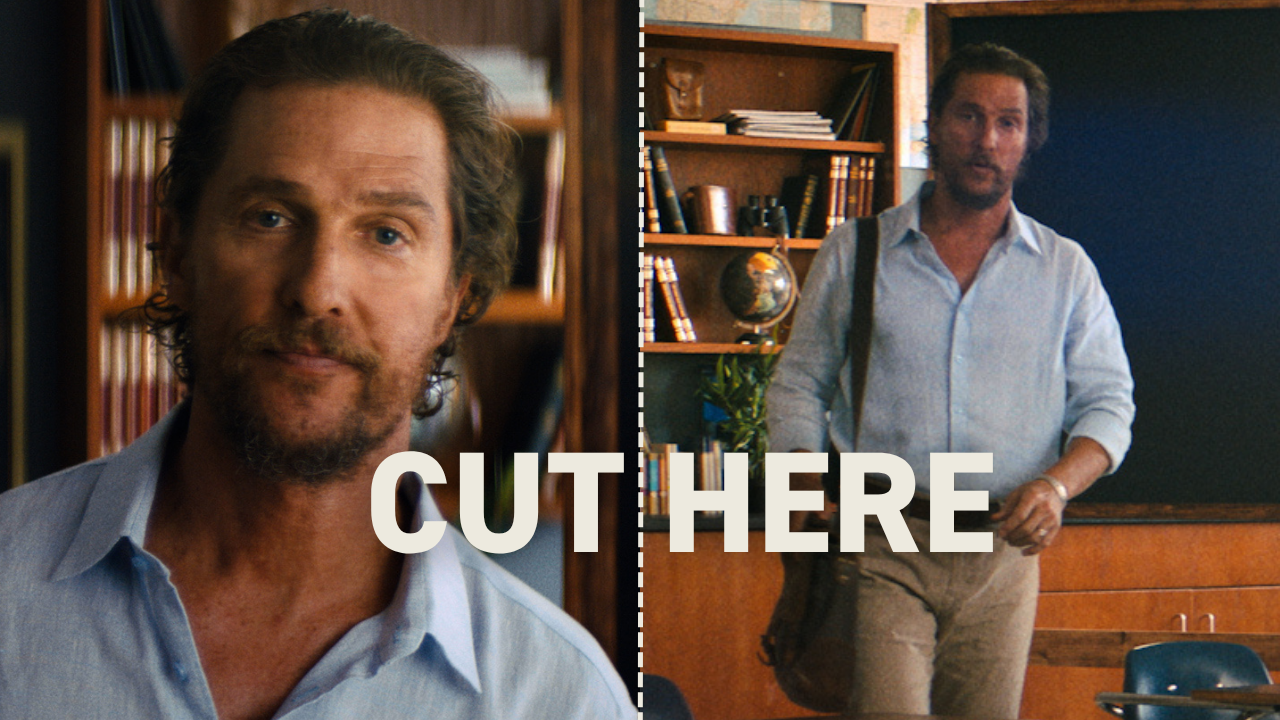
How do professional video editors decide where to cut?
Professional editors cut in at the beginning of an action and cut out at the end of an action. This fundamental approach gives every edit purpose and creates natural, emotionally-driven pacing.
The real skill lies in identifying what constitutes an action and timing your cuts to enhance the story's emotion.
What constitutes an action in video editing
An action is anything happening in the frame. It can be as big as a giant spider monster or as small as an eye movement.
The camera movement itself counts as an action too. A lot of times there are multiple actions within the frame to choose from.
This is where the decision-making gets interesting. You're not just mechanically cutting on movement — you're choosing which movement serves your story best.
Timing your cuts for different scenarios
You might be wondering when exactly you cut in and out. Is it the exact frame the action starts on and the exact frame it ends on? Well, it depends.
Action scenes
For action sequences, you might cut right on the frame the action starts. Or you might even cut in a bit after the action starts for a certain effect, just like you might cut out before the action finishes to give a sense of urgency.
The incomplete action creates momentum that carries viewers forward.
Dramatic dialogue
Are you cutting a dramatic exchange between actors? Let's say the action is an actor finishing a word — you might wait a whole beat after the action ends before cutting away.
That pause lets the emotion land before you move to the next shot. How professional video editors think about emotion first drives every timing decision you make.
The cumulative effect of deliberate cutting
Think like a broadcast editor and be more deliberate with your in-and-out points on each shot. On your next project, ask yourself: what is the action of the shot, and does the timing of the in-and-out points add to the emotion of the story?
You'll begin to notice that there is a cumulative effect on the quality of your videos when you take this into account. Each cut builds on the last one. Sloppy timing in one shot affects how the next shot feels.
Even within this simple framework of cutting on actions, the options are endless. That's what makes editing both challenging and rewarding — you're making micro-decisions that add up to something much bigger than the sum of their parts.
Want to master the complete professional editing workflow? Edit Like A Broadcast Pro teaches you to create emotionally-impactful edits that win serious clients with real budgets.
