
How to sound design a commercial like a professional editor
How do you sound design a commercial like a professional editor?
Professional commercial sound design starts with understanding perspective and builds atmosphere through layered audio tracks. Create exterior sounds for outdoor shots and interior ambience for cabin scenes, then add specific effects that emphasize the story's emotional beats.
When working on a commercial with minimal production audio, you need to build every sound from scratch to bring the story to life.
The Reality of Commercial Sound Design
Most commercials arrive in post-production with major audio challenges. The recent America First Credit Union spot I worked on had two specific issues that made sound design critical.
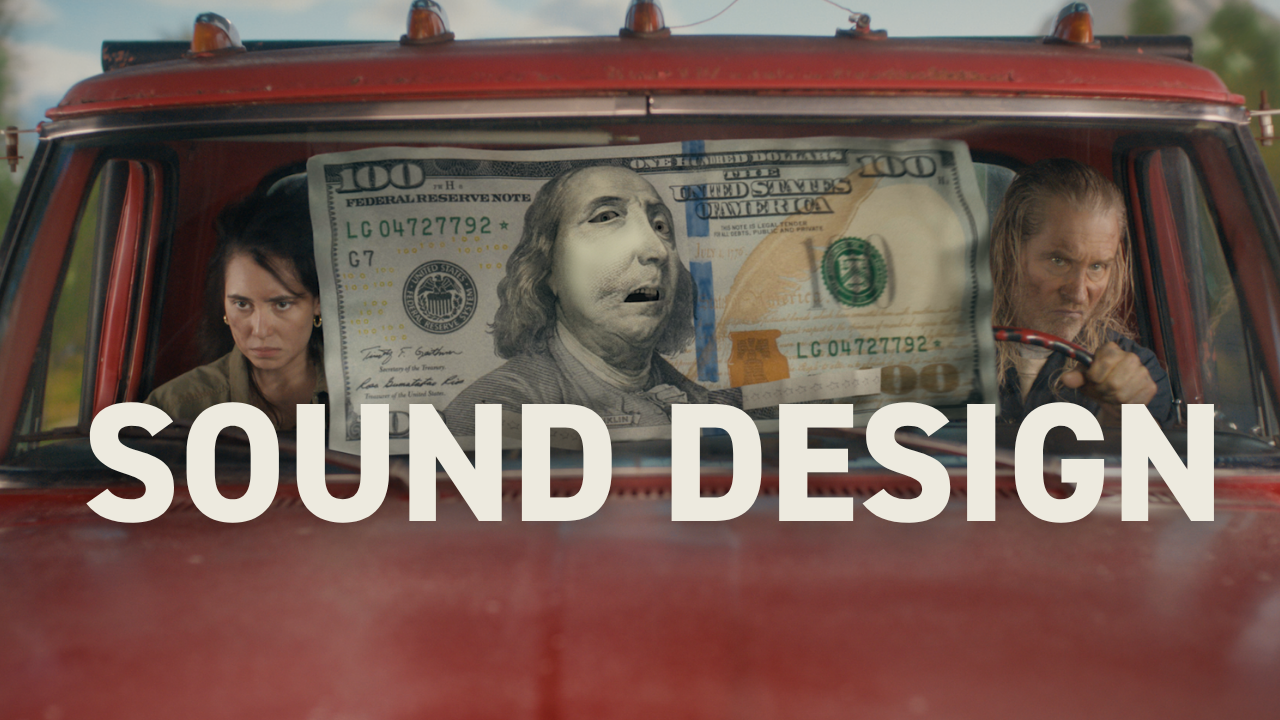
The main character was 3D animated, so he had no natural sound. The truck scenes were shot on a virtual production stage with a 70-foot LED wall playing moving backgrounds. This meant when the project arrived in the editing software, there was literally no sound to start with.
This isn't unusual. Professional video editors approach sound in every shot because they understand that audio carries as much storytelling weight as the visuals.
Building Perspective Through Audio Layers
The key to professional sound design is matching your audio perspective to your camera shots. Exterior shots need exterior-sounding ambiences. Interior shots require more intimate, enclosed audio.
For the opening exterior truck shot, I used five different layers:
- Bus driver engine idle turning off sound
- Electric car driving fast with stopping wheels for airiness
- Old Beetle car engine for the discomfort of the aging truck
- Wind howling to establish exterior perspective
- Gas release sound to communicate "car breaking down"
That last sound was crucial for the story. We needed an audio cue that immediately told the audience this vehicle had problems.
Interior Perspective Requires Different Choices
When the scene shifted inside the truck, every sound needed to feel more enclosed and intimate. I started with "old car driving down the road" — this sound really captured the rough-riding truck experience we wanted.
Then I layered:
- "Driving with windows open interior perspective" for comedy
- Dodge military truck driving fast for acceleration layers
- "Driving interior perspective air conditioning engine rattling sound" for additional texture
How to Use Three Act Story Structure in Video Editing explains how every element, including sound, should serve the story's emotional arc.
I expect many of these layers won't make it into the final mix. But I'm giving the re-recording mixer different options so they can pick what works best. Sometimes providing choices is more valuable than making the final decision yourself.
Specific Sounds That Emphasize Discomfort
Beyond ambiences, specific sound effects can really sell the emotion. For the uncomfortable truck scenes, I added:
- Wooden bed creaking during her close-up to suggest weight shifting
- Rusty metal hinge squeaks for subtle texture
- Metal hinges returning later in the commercial for consistency
These sounds aren't loud or obvious, but they reinforce the feeling that this truck is falling apart.
Bringing the Animated Character to Life
The 3D animated character required the most creative sound work. When he gets blown against the windshield, I used three tracks of paper sounds to make him feel real and physical.
For the wind effect that motivates his movement, I layered:
- Extreme climate thunderstorm ambience
- Airy whoosh for the impression of air swooping in
- Winter freezing howling gusting for additional texture
Learn professional sound design techniques that make characters feel real.
Manual Window Rolling Requires Multiple Layers
The manual window crank needed to feel authentic and substantial. I used four different window sounds:
- "Out the window car manual window opening" for the main action
- "Car window opening and closing manually" for the full motion
- Squeaking sounds for additional realism
- Another window sound for the final thunk
Layering multiple variations of the same action creates depth and authenticity that a single sound effect can't achieve.
Diegetic vs Non-Diegetic Music
The final audio element was music. I used diegetic music — music coming from the truck's stereo that the characters can hear. This feels natural within the world of the commercial.
During the end card, I switched to non-diegetic music, which exists outside the story world and only the audience hears.
The Professional Workflow
Working with Director Scott Rice and re-recording mixer David Buey at Pony Sound showed me how collaborative professional sound design really is. The editor builds the foundation, but the final mix brings everything together.
The finished commercial demonstrates how methodical sound design transforms a project shot with minimal audio into something that feels completely real and engaging.
Master the complete professional editing workflow to create commercials that compete at the highest level.
